
Air consolidation
Air consolidation combines cargo from several shippers into one shipment on a master air waybill. Smaller shipments share the booking and the paperwork. We receive and check the cargo, build the consolidation with a licensed partner, and arrange the break-down at destination.
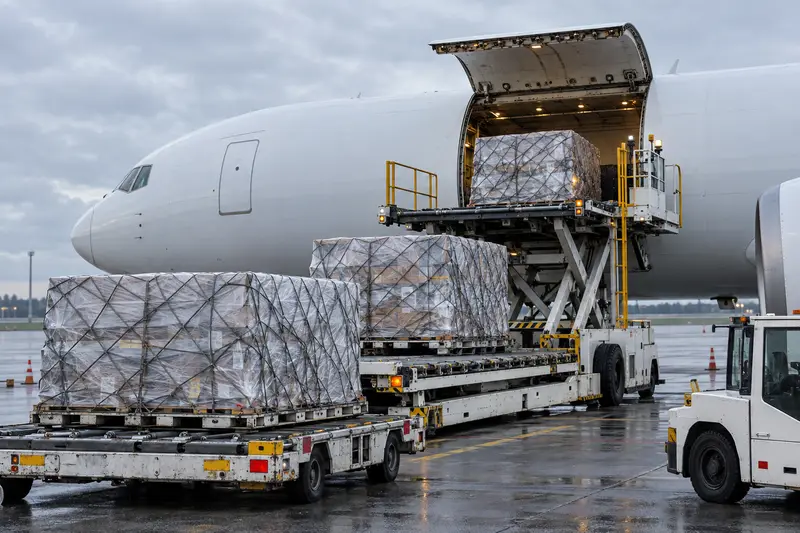
What it is
Air consolidation means many small shipments travel as one. The consolidator books a block of space with an airline and issues a master air waybill (MAWB) for the whole load. Each shipper's cargo travels under its own house air waybill (HAWB). At the destination the load is broken down and each consignee receives its own cargo.
We arrange this with a licensed partner who issues the house documents. We coordinate collection, the check at the consolidation point, the booking and the delivery.
When to use it
- Your air cargo is too small for a dedicated booking.
- You ship regularly in small lots and want to plan around fixed departures.
- Several suppliers send you goods that you want to fly together.
- You want one set of documents for a mixed load.
- You are comparing a consolidated rate with a direct booking.
What we handle
- Receiving and checking cargo at the consolidation point
- Building the consolidation and the house documents with a licensed partner
- Booking the master shipment
- Break-down at destination
- Collection and delivery by truck
- Checks of marks, labels and piece counts against the documents
How it runs
- Quote: you send pieces, weights and dimensions. We price the job and say which consolidation schedule it would use.
- Booking: we confirm your cargo onto a consolidation and send the booking details.
- Delivery to point: the truck collects, or you deliver, to the consolidation point by the cut-off.
- Check: the cargo is received, weighed, measured and checked against the packing list.
- Build and flight: the cargo is built into the load, documents are issued, and the load flies under the master AWB.
- Break-down: at destination the load is split and your cargo is cleared and delivered to the consignee.
What to send us for a quote
| Detail | Why we ask |
|---|---|
| Cargo description | Decides what can share a load and what must go separately. |
| Number of pieces | Each piece is counted on receipt. |
| Weight and dimensions of each piece | Consolidated rates use chargeable weight. |
| Origin and destination airports | Sets the consolidation lane. |
| Ready date | Decides which departure the cargo can make. |
| How often you ship | Regular lots can be planned against a schedule. |
| Packaging type | Mixed loads need cargo that can be stacked or labelled clearly. |
Good to know
- Each house shipment is weighed and measured on its own. A small shipment is still priced on chargeable weight, and there is often a minimum charge.
- Cargo that arrives after the consolidation cut-off waits for the next one.
- Dangerous goods, lithium batteries and some liquids may not be accepted on a mixed load. Ask early.
- Clear carton marks help. Mixed loads are sorted by marks, so poor labels cause delays at break-down.
Questions
Do I get my own air waybill?
You get a house air waybill, issued through a licensed partner. The airline issues the master AWB for the whole load.
Is consolidation always cheaper than a direct booking?
Not always. We compare the consolidated quote with a direct booking when you ask, and set out the difference.