
Rail freight arrangement
We arrange rail freight as one leg of a move, including China-Europe rail freight. We book the space with the operator, the road legs at each end and the documents, so the cargo is handed from truck to train and back in a planned order.
What it is
Rail freight carries containers or loose cargo on a train between two terminals. For long overland routes it sits between sea, which is cheaper and slower, and air, which is faster and costs more. These are general trade patterns, and the actual cost and time depend on the route and the season.
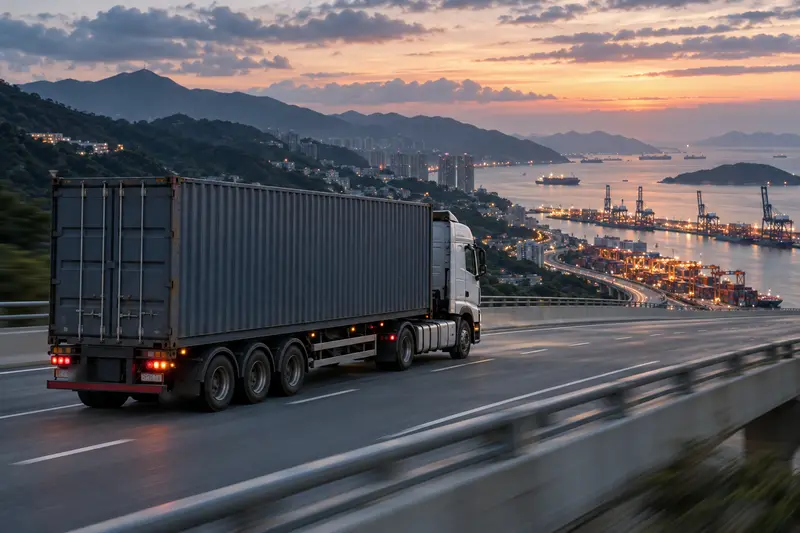
Most cargo does not start or end at a rail terminal. The cargo goes by truck to the terminal, onto the train, and by truck again at the far end. We plan all three parts together.
When to use it
- The destination is inland and rail is a practical option next to sea, air or road.
- You ship to or from an overland route, such as between China and Europe.
- Sea is too slow for the cargo and air is too costly for the volume.
- The cargo is containerised and can be handed over at a rail terminal.
What we handle
- Booking rail space with the operator
- Road legs to and from the rail terminal
- Rail consignment documents and customs paperwork, coordinated with licensed brokers
- Handover coordination between road and rail
- Checking the cargo and container details against the rail booking
How it runs
- Quote: you send the cargo, the cities and the dates, and we check what rail options exist.
- Space booking: we reserve space with the rail operator and confirm the terminal and the cut-off for delivery.
- First road leg: a truck takes the container or cargo from your address to the origin terminal.
- Rail documents: the rail consignment note and the customs papers are prepared and checked.
- Rail and last leg: the train runs, then a truck takes the cargo from the destination terminal to the consignee.
What to send us for a quote
| Detail | Why we ask |
|---|---|
| Cargo description | Operators and customs set rules by cargo type |
| Weight | Rail cars and containers have weight limits |
| Volume | To size the container or space |
| Container or loose cargo | Loose cargo needs to be loaded into a container first |
| Origin and destination cities | To check which terminals are on the route |
Good to know
- Rail has cut-off dates for terminal delivery. Miss the cut-off and the cargo waits for the next train.
- Documents often change at transfer points where the rail system changes. Keep description and weights identical on every paper.
- Some goods are restricted on rail, such as certain dangerous goods. Ask before you commit to a date.
Questions
Is rail cheaper than air?
It can be for suitable cargo, but the charges depend on the route and the day. We can quote rail next to other modes so you can compare.
Can you arrange the trucking to the rail terminal?
Yes. We book the road leg at each end and coordinate the handover.