
Cold chain and reefer
Cold chain means keeping cargo at a set temperature from origin to destination. A reefer is a refrigerated container. We book reefer equipment or temperature-controlled air space, give the carrier your set-point instructions, and coordinate the move around it.
What it is
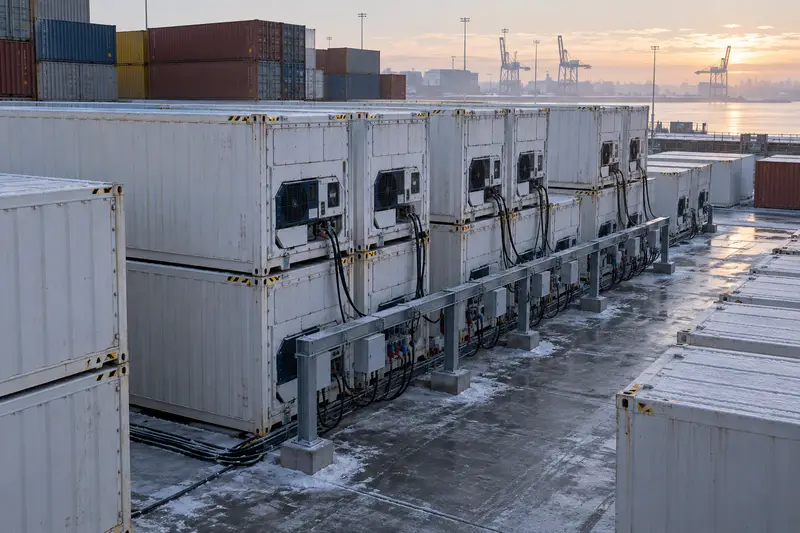
A reefer container carries its own cooling unit and holds cargo at a set temperature, called the set point. It does not cool warm cargo down. It keeps cargo at the temperature it was loaded at, so the cargo has to be at the right temperature when it goes in.
We book the reefer equipment, pass your set point, ventilation and humidity instructions to the carrier, and coordinate the trucks and the power at both ends. For air, we book temperature-controlled space. Customs declarations are coordinated with licensed customs brokers.
When to use it
- Fresh or frozen food that must stay within a range in transit.
- Medicine, vaccines or lab goods that have a temperature requirement.
- Flowers, plants or produce that need cool air and ventilation.
- Chemicals, inks or cosmetics that spoil if they get too hot or too cold.
- Goods that need a steady temperature rather than a deep chill.
What we handle
- Booking reefer containers or temperature-controlled air space
- Set-point, ventilation and humidity instructions to the carrier
- Pre-trip checks and power coordination at the ends
- Trucking with temperature control
- Documents and customs declarations, coordinated with licensed customs brokers
- Coordination of health or import permits with the right party
How it runs
- Quote: you send the cargo, the temperature range and the route. We confirm what equipment is needed.
- Booking: we book the reefer or the cold air space and confirm the set point with the carrier.
- Pre-trip: the carrier checks the unit before use. We coordinate power and the pre-cooling of the container.
- Loading: the cargo is loaded at its correct temperature and stowed to keep air moving.
- Transit: the unit holds the set temperature. Where a logger is used, we coordinate it with the carrier.
- Delivery: the cargo is unloaded at destination and we tell you by email.
What to send us for a quote
| Detail | Why we ask |
|---|---|
| Cargo description | Decides the equipment and the paperwork. |
| Required temperature range or set point | The carrier must set the unit exactly. |
| Weight and volume | Sets the container size and the load plan. |
| Packaging and pallet type | Airflow and stowing depend on it. |
| Origin and destination | Decides the route and the power needs at each end. |
| Ready date | Reefer equipment must be booked and pre-cooled. |
| Health or import permits | Perishable cargo often needs permits at destination. |
Good to know
- Frozen cargo is commonly carried at -18 C or colder, and chilled cargo is commonly held in a low single-digit range. Your product and your buyer set the exact range.
- Pre-cool the cargo before loading. A reefer holds temperature but does not pull it down quickly.
- Reefers need power. Waiting time at a terminal, depot or yard can mean power charges, so plan the handover with care.
Questions
Can you ship two products at different temperatures together?
Only if the equipment allows it. Most reefers hold one set point, so cargo at different temperatures is often split across units.
Do I need a temperature logger?
It depends on the cargo and what your buyer asks for. A logger records the temperature in transit and can support a claim. Tell us if you need one.