
Sea-air
Sea-air combines a sea leg and an air leg on one booking. Cargo goes by sea to a transfer point, then by air to the final destination. We plan both legs, book the space, and coordinate the documents and handling at the transfer.
What it is
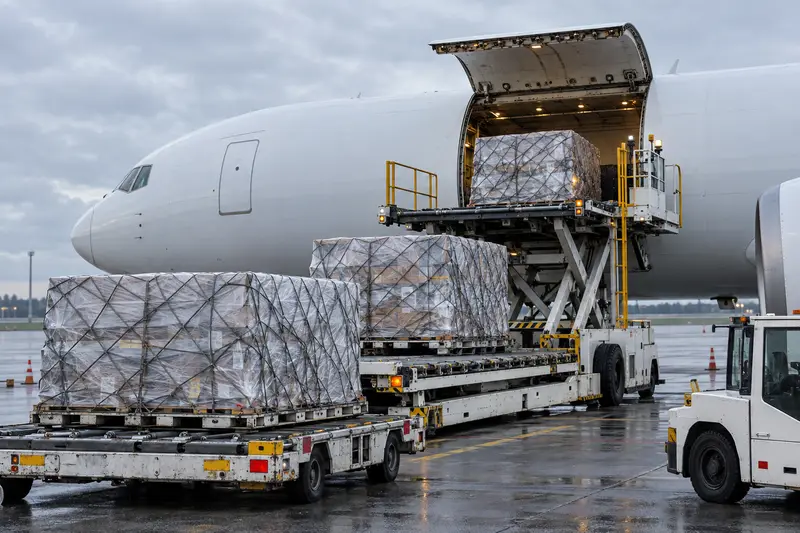
Sea-air is a mixed-mode move. The first leg is by sea, which costs less per kilogram. The second leg is by air, which shortens the time to the final destination. The two legs meet at a transfer point, where the cargo is moved from the sea side to the air side.
We plan the route, book space on both legs, and coordinate the paperwork. One booking covers the whole move, but the legs are separate carriage with their own documents. We arrange the transfer, the customs steps that apply and the delivery.
When to use it
- Air for the whole route costs more than the goods can carry, but sea alone is too slow.
- A season or a launch date sits between the two schedules.
- Cargo is light enough, or valuable enough, to be worth flying the last leg.
- You want to compare three choices - sea, air and sea-air - on the same cargo.
- The final destination is far inland or far from a main port.
What we handle
- Planning both legs and the transfer point
- Booking sea and air space
- Documents and handling at the transfer
- Customs declarations, coordinated with licensed customs brokers
- Trucking to the origin port and from the destination airport
- Delivery to the consignee
How it runs
- Quote: you send the cargo details and the date it must arrive. We set out the route and price each leg.
- Booking: you accept, and we book the sea space and the air space together.
- Documents: we prepare the documents for each leg and check them against each other.
- Origin leg: the cargo is collected and moves by sea to the transfer point.
- Transfer: the cargo is handled, checked and passed to the air carrier.
- Final leg and delivery: the cargo flies to destination, is cleared and is delivered. We tell you by email.
What to send us for a quote
| Detail | Why we ask |
|---|---|
| Cargo description and value | Sets the declaration and the handling at the transfer. |
| Weight and volume | Both legs are priced on them, in different ways. |
| Number and size of packages | Cargo must suit both the sea and air legs. |
| Origin and final destination | Decides the possible transfer points. |
| Ready date | Sets the sea departure that can be used. |
| Required arrival date | Shows whether sea-air is a fit at all. |
| Incoterm | Says who arranges and pays for each leg. |
Good to know
- Sea-air is not always available for every lane. It depends on the transfer points and the schedules on offer.
- The sea leg is subject to the same port charges as other sea freight, such as terminal handling charges (THC). The charges depend on the port and the carrier.
- Cargo that goes by sea must be packed for sea conditions as well as air handling, including moisture and stacking.
Questions
Is sea-air faster than sea?
The air leg shortens the total route compared with sea alone. We set out the schedule for the lane in the quote, and it can change with carriers.
Is one booking one document?
No. Each leg has its own transport document. We prepare and check them against each other so they match.